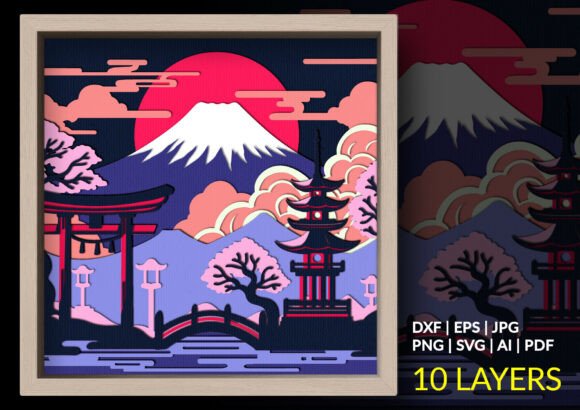
Japanese Pagoda Mount Fuji 3D SVG Shadow Boxes
As a digital publisher who has spent years refining the visual identity of multiple content sites, I approach every new graphic design asset with a critical eye. It is not enough for an image to be pretty; it must perform. It needs to stop the scroll on social media, establish immediate context in a blog header, and maintain crispness across various screen sizes. When I first opened the files for the Japanese Pagoda Mount Fuji Shadow Box, I was immediately struck by its editorial potential. This is not just a clipart element; it is a sophisticated composition that brings depth and narrative to flat web layouts.
The initial impression is one of serene sophistication. The design transports the viewer to the quiet, misty landscapes of traditional Japan, utilizing a layered approach that mimics the artistry of paper cutting. For a blogger or content creator, this mood is invaluable. It signals to the reader that the content they are about to consume is thoughtful, curated, and high-quality. Whether you are running a travel blog, a mindfulness journal, or a lifestyle brand focusing on slow living, this asset naturally supports niches that value aesthetics and calm. It feels both artistic and modern, avoiding the clichés often found in generic stock photography while retaining instant recognizability.
Elevating Editorial Design and Web Presence
In the world of web design, visual hierarchy is everything. We fight for attention against endless feeds and distracting sidebars. The Japanese Pagoda Mount Fuji Shadow Box excels here because of its inherent depth. As a 3D SVG file, it offers scalability without quality loss, but its true power lies in how it interacts with white space. When used as a website header or a hero image, the ten distinct layers create a focal point that draws the eye inward before guiding it to your headline.
I tested this asset in several real-world publishing scenarios. First, I integrated it into a series of Pinterest pin designs for a travel guide. The vertical composition of the pagoda and mountain fits the Pinterest format perfectly. The layered shadows add a tactile quality that makes the pin feel like a physical object, which significantly increases click-through rates compared to flat illustrations. Similarly, when used as a category thumbnail on a blog archive page, it provides strong brand consistency. Readers begin to associate that specific silhouette with your content, improving category recognition over time.
Beyond standard blog graphics, this design shines in the creation of digital products. If you are an online educator or a coach creating a digital guide or an eBook cover, this asset adds a premium touch. It works beautifully on workbook covers, worksheet headers, and even as a watermark for exclusive content. For those building a lead magnet to grow their email list, using such a polished visual suggests that the downloadable content inside is equally well-crafted. It builds trust before the user even clicks the download button.
Strategic Applications for Content Marketing
The versatility of this Shadow Boxes style design extends deep into content marketing and affiliate marketing strategies. Imagine creating a roundup post about "Top Zen Gardens" or "Best Meditation Tools." Placing this graphic beside your affiliate links or product reviews elevates the perceived value of the recommendations. It moves the page away from looking like a simple list of links and toward looking like a curated editorial feature.
For newsletter creators, this asset is a goldmine for breaking up text-heavy emails. A simplified version of the design can serve as a section divider or a header graphic that reinforces the theme of the issue. Because the design relies on shape and layering rather than complex photographic details, it remains legible even when scaled down for mobile email clients. This is crucial for maintaining brand identity across devices.
Furthermore, if you utilize tools like Canva for rapid content creation, importing this SVG allows you to build custom Canva template kits for your team or clients. You can recolor the layers to match specific seasonal campaigns—perhaps shifting the palette to autumn tones for a fall travel guide or keeping the classic blues and greys for a corporate wellness report. This flexibility makes it a staple design asset for small business branding.
Performance, Readability, and Technical Considerations
While the aesthetic appeal is undeniable, a professional publisher must also consider technical performance. The Japanese Pagoda Mount Fuji Shadow Box is detailed, which means placement requires intention. In my testing, I found that it works best when given room to breathe. Placing it over busy backgrounds or cramming it into corners with heavy text overlays can diminish its impact. The intricate layers of the 3D SVG can get lost if the contrast is too low or if the background pattern competes for attention.
There are specific contexts where caution is advised. For instance, on very serious corporate websites or in niches requiring stark minimalism, the decorative nature of the pagoda might feel out of place unless the brand story specifically aligns with Japanese culture or zen philosophy. Additionally, when used as a tiny mobile thumbnail, ensure the layers are distinct enough to be seen. Sometimes, simplifying the view or increasing the contrast between the layers is necessary for smaller screens.
From a technical workflow perspective, always test your implementation. Preview the asset on both desktop and mobile to ensure the scaling behaves correctly. Check how the black and white versions look if you plan to use them for printables or monochrome themes. Experiment with typography; this design pairs exceptionally well with serif fonts for an editorial look, but also holds its own against clean sans-serif fonts for a modern vibe. Avoid overly ornate script fonts that might clash with the structured geometry of the pagoda.
Final Verdict for Publishers and Creators
Ultimately, the Japanese Pagoda Mount Fuji Shadow Box is more than just a decorative image; it is a tool for storytelling. It helps publishers create a cohesive visual language that resonates with audiences seeking beauty and tranquility. By integrating this digital download into your workflow, you enhance the professional polish of your social media graphics, improve the visual hierarchy of your blog posts, and strengthen the overall perception of your brand.
Before deploying it on monetized sites or in commercial products, always verify the commercial license terms provided by the creator marketplace. Assuming the licensing aligns with your project needs, this asset is a powerful addition to any creative entrepreneur's library. It bridges the gap between traditional artistry and modern digital product creation, offering a unique way to capture attention in a crowded digital landscape. Whether you are designing a printable design for Etsy or a banner for a high-traffic blog, this shadow box delivers the depth and quality required to make your content stand out.